I have probably read a lot of books by this time in my life and I often get asked how to make reading a habit or how to read more.
Usually, my response is well why do you want to read at all. And, the answer to that is something along the lines of ‘knowing it’s good for us, we want to take the benefit out of it’. While I don’t think that anyone should compare their reading to be more or less than other people. And, I genuinely think that books could change the way that your brain could ever work.
Therefore, I want to share 3 ways that books could kind of shift and change your ability to perceive things. And, if any one of these sounds a bit interesting maybe that might give you a stronger incentive to start reading.
I. CREATE NEW REALITIES
Books go into so much detail about whole other worlds. So, in your brain, you would have that kind of space for people, places, connections, histories, and stories that are just as real as you have lived those experiences by yourself.
Sometimes even as an adult at times you might want to escape the present for life half an hour. All you need to do is pick a fiction book, in which you already know that you can get lost in yourself through getting lost in the whole of other reality.
When you would experience reading to escape your reality, after a while you would find that; inclining ready with your life situations, you ever wanted to escape have given a new dimension, a fresh perspective to your heartfelt, personal memories.
Reading even adds the whole areas of vibrancy and joy that are very fun to kind of escape. Moreover, reading kinda really promotes your imagination in an absolutely beautiful way.
II. TURNS ON THE IMAGINATION
For example, if I’m reading a story where an author is kinda describing the trees and lots of detail about its moves, shape, size, and the way they shed its leaves. I have realized that the next time when I leave my home I more often appreciate the existence and there. presence and ever minute changes in my surrounding like I would never do anyhow.
Many different authors choose to focus on many different realities which can be physical things or certain characters like how the hair flows in the main protagonist, or how their eyes sparkle.
Reading lets you focus on all the tiny yet quite significant things or the type of people in your surroundings.
Reading helps you to accept the difference between you and the other person.
Do you know? What is the difference between you and them? They may be; the one who is sitting beside you but still doesn’t aware of your presence in their life, they may be the one who resides away and still value your existence in their life. Or, the one who doesn’t ask anything in return for everything they do for you, or the one who doesn’t give anything in return for whatsoever you do for them.
The difference between you and them is the perspective, how to see and understand things and how they do it.
I won’t say that you should let go of someone, who did something wrong to you. And, I don’t even recommend you to do something for the sake of having a different perspective.
What do you need to do? Accept that they possess a different perspective and let them be as they are in their life. Instead of convincing, complaining, changing, moreover expecting. Doesn’t this sound better?
Reading teaches you the insight of acceptance into diversity within human perspective, living, and loving.
III. UNLOCK THE PARTS OF YOUR BRAIN
Yes, reading does unlock those parts of your brain that you didn’t know that you even have access to.
For example, at times when you feel bad, you might label it as anxiety or stress or just feeling low. But, every often it feels quite vague as you actually don’t know what is actually causing that particular kind of feeling.
I fully believe that if I don’t have specific words to name my feelings I just don’t have access to what that feeling really is.
What happens is that your subconscious might know what it is but you are only consciously aware of the fact that there’s something brewing inside there. But, you don’t know what it is.
Now, how reading helps here is like when sometimes you would read a book where the author can describe very very similar to what you were feeling and suddenly something would click in your mind and you would get to know that why you felt that way, or why you reacted in a certain way.
This is all because authors can express the character they have created themselves. And, because they have a better grip on literature than you have.
Those were the ways how you could let reading improvise your perspective moreover life. Do what works for you, but do consider these points whenever you feel confused about life.
The first thing you should know about worry is this: if you want to keep it out of your life, do what Sir William Osier did –
1. Shut the iron doors on the past and the future. Live in Day-tight Compartments Why not ask yourself these questions, and write down the answers? 1. Do I tend to put off living in the present to worry about the future or to yearn for some “magical rose garden over the horizon”? 2. Do I sometimes embitter the present by regretting things that happened in the past- that is over and done with? 3. Do I get up in the morning determined to “Seize the day”-to get the utmost out of these twenty-four hours? 4. Can I get more out of life by “living in day-tight compartments”? 5. When shall I start to do this? Next week? .. Tomorrow? … Today?
I keep six honest serving-men: Their names are What and Why and When And How and Where and Who.
-Rudyard Kipling
RULES TO DEAL WITH DIFFERENT WORRIES
I. How To Break The Worry Habit Before It Breaks You?
RULE 1: Crowd worry out of your mind by keeping busy. Plenty of action is one of the best therapies ever devised for curing “Webber gibbers”. RULE 2: Don’t fuss about trifles. Don’t permit little things-the mere termites of life-to ruin your happiness. RULE 3: Use the law of averages to outlaw your worries. Ask yourself: “What are the odds against this thing’s happening at all?” RULE 4: Co-operate with the inevitable. If you know a circumstance is beyond your power to change or revise, say to yourself “It is so; it cannot be otherwise.” RULE 5: Put a “stop-loss” order on your worries. Decide just how much anxiety a thing may be worth-and refuse to give it anymore. RULE 6: Let the past bury its dead. Don’t see sawdust.
II. How to cultivate A Mental Attitude That Will Bring You Peace And Happiness?
RULE 1: Let’s fill our minds with thoughts of peace, courage, health, and hope, for ‘ ‘our life is what our thoughts make it”. RULE 2: Let’s never try to get even with our enemies, because if we do we will hurt ourselves far more than we hurt them. Let’s do as General Eisenhower does: let’s never waste a minute thinking about people we don’t like. RULE 3: A. Instead of worrying about ingratitude, let’s expect it. Let’s remember that Jesus healed ten lepers in one day-and only one thanked Him. Why should we expect more gratitude than Jesus got? B. Let’s remember that the only way to find happiness is not to gratitude but gratitude-but to give for the joy of giving. C. Let’s remember that gratitude is a “cultivated” trait; so if we want our children to be grateful, we must train them to be grateful. RULE 4: Count your blessings, not your troubles! RULE 5: Let’s not imitate others. Let’s find ourselves and be ourselves, for “envy is ignorance” and “imitation is suicide”. RULE 6: When fate hands us a lemon, let’s try to make lemonade. RULE 7: Let’s forget unhappiness by unhappiness-by trying to create a little happiness for others. “When you are good to others, you are best to yourself.”
III. How To Keep From Worrying About Criticism?
RULE 1: Unjust criticism is often a disguised compliment. It often means that you have aroused jealousy and envy. Remember that no one ever kicks a dead dog. RULE 2: Do the very best you can, and then put up your old umbrella and keep the rain of criticism from running down the back of your neck. RULE 3: Let’s keep a record of the foolish things we have done and criticise ourselves. Since we can’t hope to be perfect, let’s do what E. H. Little did: let’s ask for unbiased, helpful, constructive criticism.
IV. How to prevent Fatigue And Worry And Keep Your Energy And Spirits High?
RULE 1: Rest before you get tired. RULE 2: Learn to relax at your work. RULE 3: If you are a housewife, protect your health and appearance by relaxing at home RULE 4: Apply these four good working habits- a. Clear your desk of all papers except those relating to the immediate problem at hand. b. Do things in the order of their importance. c. When you face a problem, solve it then and there if you have the facts necessary too make a decision. d. Learn to organise, deputise, and supervise. RULE 5: To prevent worry and fatigue, put enthusiasm into your work. RULE 6: Remember, no one was ever killed by lack of sleep. It is worrying about insomnia that does the damage-not the insomnia
V. How to break the worry habit?
Rule 1. Find out precisely what problem you are worried about. Rule 2. Find out the cause of the problem. Rule 3. Do something constructive at once about solving the problem.
VI. What art the rules for the rest of your life?
Rule 1. Avoid worry. Never worry about anything, under any kind of circumstances. Rule 2. Relax, and take plenty of mild exercise in the open air. Rule 3. Watch your diet. Always stop eating while you’re still a little hungry.
VII. How to avoid resentment and worry over ingratitude?
Rule 1: Instead of worrying about ingratitude, let’s expect it. Let’s remember that Jesus healed ten lepers in one day-and only one thanked Him. Why should we expect more gratitude than Jesus got? Rule 2: Let’s remember that the only way to find happiness is not to expect gratitude, but to give for the joy of giving. Rule 3: Let’s remember that gratitude is a “cultivated” trait; so if we want our children to be grateful, we must train them to be grateful.
Quick fix remedies to your worries from the book
I. If you have a worrying problem, apply the magic formula of Willis H. Carrier by doing these three things- 1. Ask yourself,’ ‘What is the worst that can happen?” 2. Prepare to accept it if you have to. 3. Then calmly proceed to improve on the worst.
II. To reduce your worries by fifty per cent. Here they are again: 1. What is the problem? 2. What is the CAUSE of the problem? 3. What are all possible solutions to the problem? 4. What solution do you suggest?
III. Motto rhyme: For every ailment under the sun. There is a remedy, or there is none; If there be one, try to find it; If there be none, never mind it.
First of all, I want to know who lied to us and told us that we’re supposed to spend the weekend partying so we never catch up on rest. And, further, we never have time to do things for ourselves.
Because we party during the weekend and then we need the first part of the week to recover it’s this endless cycle of not resting or overexerting ourselves during the week and then further exerting ourselves on the weekend.
3 Tips to conquer a week
Why do I feel tired all the time? 3 ways to truly rest
#1 tip: EMOTIONAL REST
This is something that is new to me and that I have recently come to understand is so powerful. Emotional rest is to allow yourself to be true to your own emotions being true to how you really feel. And, this would be really hard for a people pleaser, one like me.
I found out that it’s really such a relief to just know; I’m with people sometimes I’m not feeling so good so I’m not gonna have a smile on my face I’m not gonna fill in the white space with rambling about some random thing just to make other people feel more comfortable.
It’s just being genuine about how you feel authentically. Let your face do what it wants to drop. If it doesn’t want to have a smile on all the time. That’s fine to spend your time expressing yourself intentionally.
Expressing yourself through breath work and having a really good cry is emotional rest. Emotional rest really deflates all these extra emotions and stress chemicals from our bodies.
#2 tip: CREATIVE REST
Yes! there is another rest called creative rest. It’s seeing something beautiful and not needing to do anything about it.
Creative rest comes into play when you are not trying to monetize the beautiful thing or make it something productive.
Creative rest is when you are just sitting there watching something beautiful and taking it in. As in, when you watch a sunset, a sunrise, gazing starts.
To experience creativity rest either you can hang out in your gallery to gaze at the natural beauty or could visit an art gallery.
The creative rest is doing something that is just for yourself. It is to rest the anxiety within yourself when at times feeling restless about, “what to do to feel better in the very situation.”
#3 tip: SPIRITUAL REST
Spiritual rest connects you with a divine so this could be connecting to something bigger than yourself. It’s connected to your higher self in the community or individually through prayer.
What I do is I really like to go to my balcony to talk to God and journal and of course, you can talk to your higher self, the universe from wherever you are.
So far I have realized that it is so restoration and rejuvenating to do so, in nature. It’s almost like I can feel the presence of the almighty even more.
If on any day you find yourself saying ‘I needed to hear this today‘
This book is not going to be a revelation. It is meant to be a reminder. A reminder of how life happens to all of us, in a similar yet unequal fashion.
This book is not going to say something new. It is meant to put words to your thoughts. Thoughts that we all feel, repeatedly, but rarely stop to make sense of.
This book is not going to change your life. It is meant to make you more aware. So that you make choices in life from a state of awareness and not ignorance.
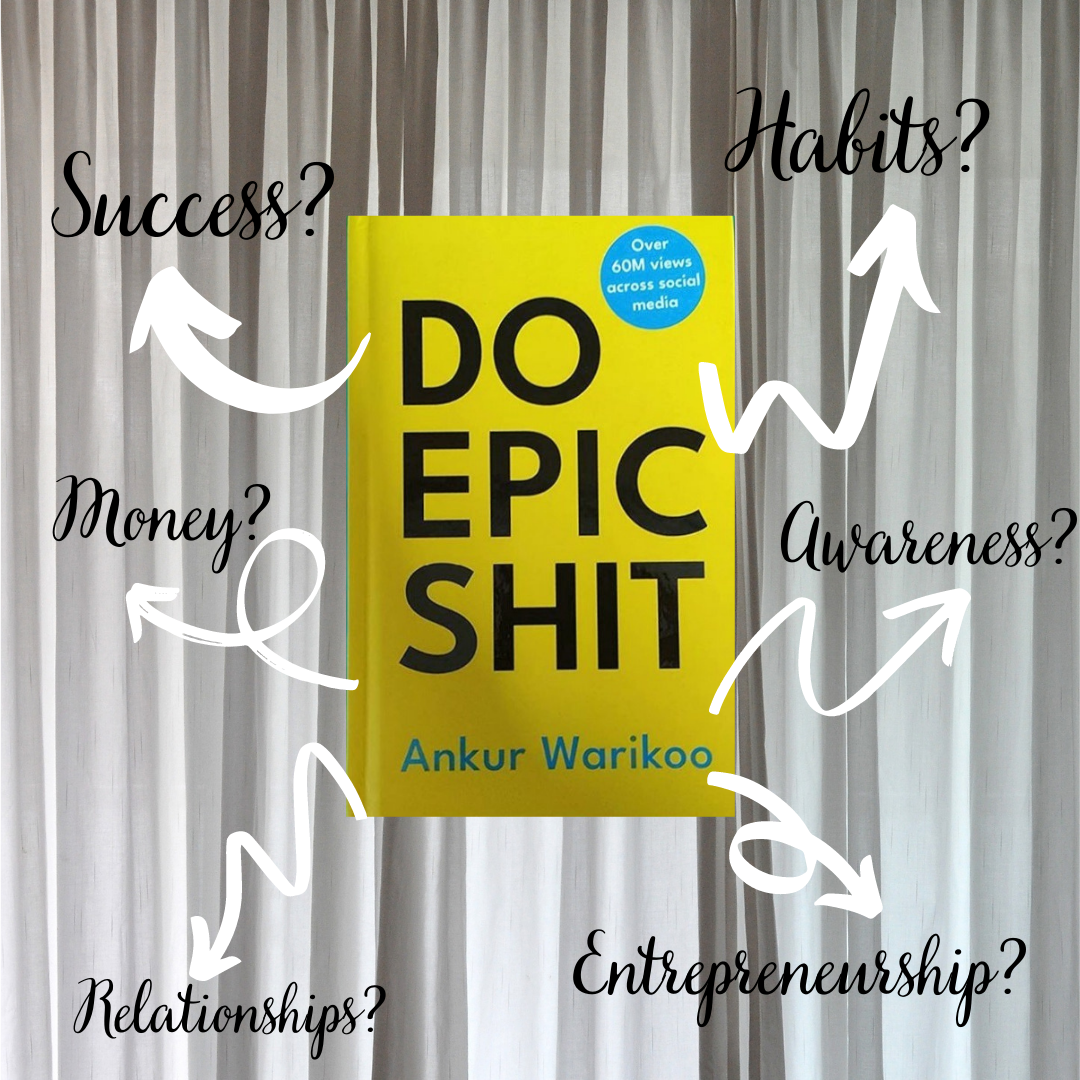
Book consists of 6 reminders; about: I. SUCCESS (AND FAILURE) II. HABITS III. AWARENESS IV. ENTREPRENEURSHIP V. MONEY VI. RELATIONSHIPS
I. Reminders about SUCCESS (AND FAILURE)
1. Start today. Time goes away and leaves us with only one of these two things: regret or results.
2. How we think of our problems is how the world will think of our problems. – If we exaggerate our problems, so will the world. – If we are happy despite our problems, the world will help us get happier. (While we (almost always) don’t choose our problems, we can always choose how to respond)
3. You are what you do. Not what you say you’ll do.
4. Commitments are nothing if not backed up with actions. Luck happens to those that make things happen.
5. Persistence isn’t a one-day miracle. It is a conscious choice translated into habit.
6. The world will constantly be defining success and failure for you. Realizing this is what is called self-awareness.
7. If you are unhappy with where you are in life right now, do not wait to find out what you should be doing. Move out of where you are in life!
8. Don’t measure how valuable you are by the way you are treated. The world is going to treat you how it wishes to treat you. You don’t control that. You only get to choose who you listen to.
9. Most sports are not played on the field. They are played in the mind!
10. You don’t find your passion. You grow your passion!
11. Once you succeed, people see only success. If you fail, they see only failure. They don’t see the journey. Only you do. It is on this journey that your life was lived!
12. If you often worry about what people will think of you, you will often end up doing what people want you to do.
13. Your goal is to make people say: ‘I am not sure if she knows how to do it. But I am certain if told to do it, she will definitely figure it out. I trust her.’
II. Reminders about HABITS
1. The author doesn’t set goals, for two reasons: – You do it for a destination, instead of becoming someone in the process – You invariably start chasing another destination, upon reaching one. Instead, habits have come to help him in the smallest to biggest things in life.
2. Share your journey. Document your journey. Narrate your journey. Your story is valuable. Maybe you don’t see it.
3. Targets are the enemy of habits. Don’t set targets. Set habits!
4. Most important skills today that are hardly taught: – Humour – Storytelling – Managing money – Human psychology – Cold emailing
5. Three things that will tell you who/what you consider as important in your life. 1. Your first hour after you wake up 2. Your last hour before you sleep 3. Your calendar
6. We know others through their actions. We know ourselves through our thoughts.
7. Thoughts are powerful, when they are converted into actions. Without action, they are simply broken promises. We nod to show that we are listening. But we are not listening to the opposite person. Instead, we are listening to our mind telling us what to say.
8. Your attendance doesn’t define your discipline. Your attention does.
9. Choose who you spend time with, wisely! Optimize for learning, not salary. Optimize for progress, not stability. Optimize for facing fears, not for comfort.
10. Do not allow comfort to make you believe that you no longer need to try! In a society that is obsessed with hard work and career success, seeking boredom is an act of rebellion. Seeking boredom through free time helps you feel comfortable in your skin.
11. As the world progresses, it is getting easier to slump into laziness and feel lethargic. And it is getting equally easier to lift yourself out of slumber and get moving. It is frankly a matter of intent. Not capability anymore. Not even access.
III. Reminders about AWARENESS
1. If everyone did it, it wouldn’t need to be said. – Not everyone exercises. Thus, it needs to be said more often. – Not everyone spends time with their team. Thus, the best leaders say it more often. – Not everyone spends time journaling. Thus, the wisest minds help us to get into the habit.
2. Our actions are driven by our feeling of what people feel about us! This begs the question, whose life are we living?
3. Do not confuse calmness with a lack of fire. Calmness doesn’t mean lack of drive. It rather means having the power to turn that drive into actions.
4. Your self-talk determines your self-worth. We are all the stories we tell ourselves.
5. Most decisions in life are reversible. But we assume they are set in stone. The second we think decisions are reversible, we start giving serendipity a chance!
6. Awareness is the start of the decision. Not the end of it. Step 1 is Awareness. Step 2 is Execution. Step 3 is Rinse and Repeat.
7. Comparing yourself to others is the biggest waste of time. – Everyone had different beginnings. – Different temperaments of parents. – Totally different interests and hobbies. – Different ways parents perceived success. – Different teachers who taught you to fit in.
8. We always have two choices: – The easy one – The right one
9. We aren’t addicted to things. We are addicted to the emotions that these things generate!
10. If you don’t ask, the answer is always no.
11. The hardest thing in the world is telling yourself that it’s not hard at all. – It is not hard to wake up early. – It is not hard to make money. – It is not hard to approach strangers. – It is not hard to express love. – It is not hard to send cold emails. – It is not hard to ask for a raise. – It is not hard to ask questions. – It is not hard to voice your opinion
12. The most memorable moments of your life would have a sense of freedom attached to them.
13. Do not mistake starting slow as starting small. – You are not the only one confused. – You are not the only one unsure. – You are not the only one struggling. – You are not dumb, inadequate, incapable. – Everyone is struggling. – Everyone is figuring it out. – Don’t be harsh on yourself.
14. When it comes to money, more information doesn’t make people more aware. It makes them more scared.
IV. Reminder for ENTREPRENEURSHIP
1. People would much rather work for a competent asshole than an incompetent nice guy.
2. Capability is rarely the question mark in life. It is always the intent.
3. An optimistic, driven individual will figure out a way to learn more. A successful skilled individual will struggle hard to grow if they see pessimism in every possibility.
4. Show people who they can be. Instead of telling them who they shouldn’t be.
5. The worst thing a company does to its employees is: 1. Rate them once a year 2. Tell them how well they did 3. Measure them on metrics they didn’t even know they were being assessed on
6. The real game is to have conversations with every team member. – To listen to them just with the intent of listening to them. – To know them, because that is what will help you make wiser decisions.
7. The three worst reasons to become an entrepreneur: 1. I want to make money 2. I hate my current job 3. Everyone is doing it
8. A great leader should be replaceable when it comes to their tasks and actions. And irreplaceable when it comes to their thoughts and vision.
V. Reminder for MONEY
1. Money is simply a medium of transaction. When it becomes an emotion, that is when it consumes us.
2. When we disguise our desires as our needs, we almost always end up making a mistake.
3. Financially smart people take loans even if they can afford, to save money. Financially weak people take loans knowing that they can’t afford, to spend money!
4. Our income is not capped. There is no upper limit to how much we can earn. Instead, it is our spending that is capped. We have to spend a bare minimum to live, to survive.
5. The right time to start investing was when you turned 18. The next best time is TODAY.
6. Use money to earn your freedom. Don’t give up your freedom to earn money.
7. If you do not know how to care for money, money will stay away from you. – Robert Kiyosaki
8. Wait. The price you buy at, determines your return. ‘No one wants to get rich slowly.’ – Warren Buffet
VI. Reminders about RELATIONSHIPS
1. Relationships are the place where we thrive. They are also the place where we are challenged the most.
2. Healing isn’t an option. It is a necessity. Holding a grudge against someone requires a lot of effort.
3. Every problem in this world can be traced back to a point of miscommunication. All relationships thrive on communication.
4. We create our relationships by what we choose to give. Nothing teaches you better than teaching others.
5. Not everyone is going to reciprocate your kindness. – Some are even going to play with it. – Some are not going to care. – Some are not going to acknowledge it ever.
6. Unpopular opinion: Empathy cannot be taught. You are either born with it or not. Empathy = I understand what you are going through.
7. No one is useless. Everyone knows something you don’t.
8. By not appreciating someone for their vulnerability and truth, all we do is encourage lying.
9. True respect is when you respect someone even after you’ve got to know them.
10. Runaway from those who are trying to run away from themselves.
11. Do not show up for every argument you are invited to! An undeniable life hack for your peace.
12. Wanting to maintain a distance from someone you do not relate; to any more doesn’t mean you don’t care about them. It just means you care about the relationship you have with yourself more than the one you have with them.
Most people go about time management backwards. They think about the whole goal of walking habit that they wanna embrace. They talk about the tasks that they were assigned in the meeting last week.
And then they think about the goal that they have to be a young adult fantasy author by age 30, getting awfully specific.
And then they take all of those things and they stuff them into a calendar, but inevitably, things fade and then they wait until they get another burst of motivation that makes them wanna take control of their time again.
The main way that people go wrong when they are planning out their goals is that they picture their future self as like a month to be the absolute ideal self.
They are planning for this ideal future version of them, not the current ones. Their future self is filled with resilience, motivation, and endless energy, never have circumstances come up that mess with that plans.
3 tips to conquer a week
Here is how would you manage yourself to manage your time.
Tip 1: Give yourself options
The biggest way we fall down when we are managing our time we are managing for this aspirational self.
The reason for giving up on our capabilities while not being able to cope with our plans is being: – Rigid with our choices, and – Limited with our options
One way that you can do to have a vision of having more than the options that you thought of is by creating a:
IF THEN CHART
– Write a list of all the things that you can do that make you feel on top of life. – Don’t cast in a bunch of tasks that you genuinely don’t do. – Now, give yourself options according to the different states of mind you may go through while practising what you think you can do.
As in, you may feel: – Surprisingly involving with the activity. – Awfully pissed off with time, mind, and effort you had to invest in that task. – Unable to conclude what are you getting in return for practising the specific thing.
When you know, how you could react to the things you are capable of doing. Now you can very well know, what is the best possible response you could give to all the options available to you.
Tip 2: Do work that you do well
Think back to a day recently, or in the past where you spent the day using your strengths, doing things that not only you enjoyed but also you were pretty good at.
It’s like that you were energized, you were floating, you were flowing through the day, things were easy, you got lots done.
Then think back to a day when you had to do a bunch of stuff that you just didn’t enjoy.
Sometimes you do have to mix both of these things in. Sometimes you do have to do crap tasks, that you aren’t good at.
But so long as you are scheduling: – the stuff that you are good at, – the stuff that does make you feel creative, – the stuff that does make you feel inflow; you are going to contribute to your overall energy levels throughout your days.
Work tasks that; – make you feel good, and – you are good at.
Ideally, a combination of those two things because those are the things that you should be scheduled within your days.
Tip 3: Take regular restorative breaks throughout the day.
Once it’s been doing something for a long time. As our brain gets tired, it just gets it’s vulnerable to distractions and as a result, we waste time.
Instead of recognizing that your brain is tired, you are vulnerable to distraction.
It’s time to take a responsible break. We just keep powering on. And, as a result, the time we could have spent taking these intentional, refreshing, restorative breaks gets wasted on web surfing, going through social media, on excessively checking email.
Unless you are one of those people with just endless energy but breaks will replenish you enough that you’ll be able to get more done in your day with more purpose and with more clarity.
Studies have shown that breaks did the right way to replenish the energy that you are losing from using all this mental energy doing work.
Breaks increase your self-control, your willpower, and your decision-making abilities.
Taking restorative breaks is a much better way to approach life than just letting yourself get distracted and then waste time.
Those were the 3 tips on how you could have more time by managing yourself well.
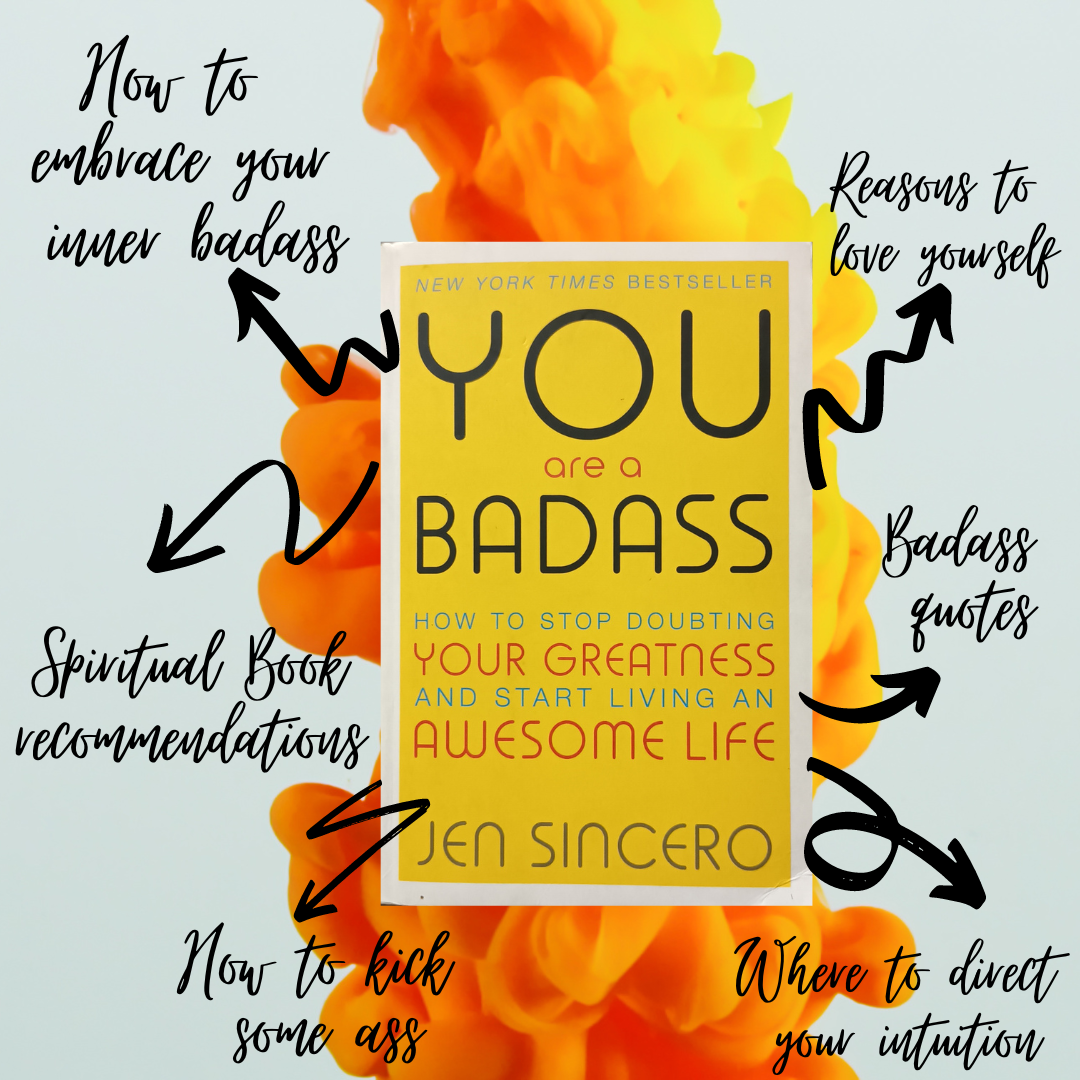
How to stop doubting your greatness and start living an awesome life
REASONS TO LOVE YOURSELF
Love yourself…
1. Because it’s the Holy Grail of happiness. 2. No matter what anyone else thinks. 3. Like you are the only you there is. 4. No matter who you really are. 5. Unless you have a better idea. 6. And the bluebirds of happiness will be your permanent backup singers. 8. And everybody benefits. 9. Be grateful for all you are and all that you are becoming. 10. You deserve it. 11. And life becomes a party. 12. More than you love your drama. 13. Right now, where you are at. 14. You are doing an awesome job. 15. And you will be invincible. 16. Fiercely, loyally, unapologetically. 17. While you have still got the chance. 18. You can do anything. 19. And you will have it all. 20. And the Motherlode shall bestow her magic upon you. 21. With a Kung Fu grip. 22. You are a badass.
Lessons from the book
1. Our conscious mind thinks it’s in control, but it isn’t. Our subconscious mind doesn’t think about anything but is in control.
2. All of us are connected to this limitless power and most of us aren’t using but a fraction of it.
3. The universe will match whatever vibration you put out. And you can’t fool the universe.
4. In order to truly raise your vibration, you’ve got to believe that everything you want is available to you.
5. It’s not that the things and opportunities that we want in life don’t exist yet. It’s that we’re not yet aware of their existence (or the fact that we can really have them.)
6. It’s just as easy to believe we’re awesome as it is to believe we’re giant sucking things.
7. When we’re happy and all in love with ourselves, we can’t be bothered with the bullshit (our own or other people’s).
8. All that matters is what’s true for you, and you can stay connected to that without straying, you will be a mighty superhero.
9. Most answers reveal themselves through doing, not thinking.
10. Our fantasies are our realities in an excuse-free world.
11. The moment you dare to start believing in the not-yet seen, your reality will begin to shift.
12. Being in gratitude for the not-yet manifested informs the universe that you know that what you desire already exists, and puts you at the right frequency to receive it.
13. Our entire experience on this planet is determined by how we choose to perceive our reality.
14. Going out into the world and trying, yet still deep down believing that you’re ruled by your past circumstances, is like forgiving someone but still hoping they sit in something wet.
15. Because so often when we say we’re unqualified for something, what we’re really saying is that we’re too scared to try it, not that we can’t do it.
16. If you’re serious about changing your life, you’ll find a way. If you’re not, you’ll find an excuse.
17. Life is but a dream. Don’t turn it into a nightmare.
18. Do what you can do in joy, instead of trying to do it all in misery.
19. To fear or not to fear, that is the question.
20. Is your fear greater than your faith in the unknown (and yourself)? Or is your faith in the known (and yourself) greater than your fear?
21. On the other side of fear is your freedom.
22. The people you surround yourself with are excellent mirrors for who you are and how much, or how little, you love yourself.
23. At the end of the day it’s not about them, it’s about you believing you’re worthy of being loved and see for who you really are.
24. Never apologize for who you are. It lets the whole world down.
26. Deciding is freedom. Indecision is torture.
27. Decisions are not up for negotiation.
28. When you up-level your idea of what’s possible and decide to really go for it, you open yourself up to the means to accomplish it as well.
29. Your beliefs hold the key to your financial success.
30. One of the best things you can do to improve the world is to improve yourself.
31. Money is an exchange of energy between people.
32. Your faith in the universe must be stronger than your fear of not getting what you want.
33. Surrendering is the part where you hand the job over to the universe.
34. An epiphany is a visceral understanding of something you already know.
26 Badass Quotes from the book
1. “You can start out with nothing, and out of nothing, and of no way, a way will be made.” – Reverend Michael Bernard Beckwith.
2. “You are a victim of the rules you live by.” – Jenny Holzer
3. “If you want to find the secrets of the universe, think in terms of energy, frequency and vibration.” – Nokola Tesla
4. “If you are depressed, you are living in the past. If you are anxious, you are living in the future. If you are at peace, you are living in the present.” – Lao Tzu
5. “Wanting to be someone else is a waste of the person you are.” – Kurt Cobain
6. “If we really live ourselves, everything in our life works.” – Louise Hay
7. “I’m not offended by all the dumb blonde jokes because I know I’m not dumb. I also know in not blonde.” – Dolly Parton
8. “The big question is whether you are going to be able to say a hearty yes to your adventure.” – Joseph Campbell
9. “It is better to be hated for what you are than to be loved for what you are not.” – Andre Gide
10. “You are never alone or helpless. The force that guides the stars guides you too.” – Shrii Shrii Anandamurti
11. “Mind is the master power that moulds and makes And man is Mind and evermore he takes The tool of Thoughts and, shaping what he wills Brings forth a thousand joys, a thousand ills. He thinks in secret, and it comes to pass: Environment is but his looking glass.” – James Allen
12. “In the beginner’s mind, there are many possibilities, but in the expert’s there are few.” – Shunryu Suzuki
13. “It is one of the beautiful compensations in this life that no one can sincerely try to help another without helping himself.” – Ralph Waldo Emerson
14. “When you are grateful, fear disappears and abundance appears.” – Anthony Robbins
15. “Forgiveness means giving up all hope for a better past.” – Lily Tomlin
16. “You don’t paddle against the current, you paddle with it. And if you get good at it, you throw away the oars.” -Kris Kristofferson
17. “Reality is merely an illusion, albeit a very persistent one.” – Albert Einstein
18. “In order to kick ass, you must first lift up your foot.” – Jen Sincero
19. “I have lived in life and had many troubles, most of which never happened.” – Mark Twain
20. “No one can make you feel inferior without your consent.” -Eleanor Roosevelt
21. “It’s great to be here. It’s great to be anywhere.” -Keith Richards
22. “Until one is committed, there is hesitancy, the chance to draw back, always ineffectiveness. The moment one definitely commits oneself, then providence moves too.” – W.H. Murray
23. “I worked for a menial’s hire Only to learn, dismayed That any wage I asked of Life Life would have willingly paid.” – Anonymous
24. “Surrender to what is. Say “yes” to life and see how life suddenly starts working for you, rather than against you.” – Eckhart Tolle
25. “God will not have his work made manifest by cowards.” -Ralph Waldo
26. “Nothing is impossible, the word itself says “I’m possible.” – Audrey Hepburn
It is not a problem if you feel too much. It’s normal if you wake up and find your mind and body already buzzing, excited, dreading, anticipating stress, overwhelming joy, pain, pleasure, amusement, love, fear, boredom and pain.
It’s high time for you to learn that you appreciate your emotional intensity and passion of yours. Because it is exactly these sort of positive qualities (emotional intensity) that sometimes can save you from getting into a wandering, confused, and uncertain mode of your life.
So, here I discuss 3 ways, how you could manage your emotional intensity in the best possible manner.
#1 Ignore
Although conventional wisdom tells us that it is the most mature thing to face our problems head-on and deal with everything.
Well! there are cases where completely ignoring our problems and stepping away from us is quite helpful.
By conscious ignorance, you would find it so effective for those sorts of things in life that you just simply cannot change.
By far I have acknowledged that putting ourselves through the constant suffering of reliving those uncomfortable memories, again and again, will change absolutely nothing. Rather, they do hold the potential to distract us from the present by making us feel miserable.
Sometimes the memories and flashbacks to things that we have done or have been done to us in the past can be completely incapability outside of a healthy and controlled environment such as therapy or exercise.
Ignoring situations that no longer serve you would make you feel comfortable enough to know that you can process some unworthy situations from your past in the right way.
You can package it in a story that is more realising and make more sense rather than bringing an awful person to oneself.
With all honesty ignoring could not be the bottom line to every problem in our life. Absolutely not!
There are of course issues around avoiding and ignoring our problem which leads me to my second point.
#2 Chase
It’s okay to feel the pain. But it’s not okay to suffer from your pain.
But I tell you pain does have a shape and size of its own. You can measure your pain, your heart ages, and your soul aches.
Because I’m not talking about physical pain. I’m talking about the pain which gets generated from our gas past experiences, which further affects our emotions, feelings, our thought processes. And, ultimately our life.
It’s high time you should start believing that we should not be hoping for a life without problems. Problems will come anyway we should be hoping for a life with the right type of problems.
The fact not all pain is bad. You may have already realized some of the moments of the most intense experiences of intense emotional pain.
I live the phrase,' pain is coming anyway don't get a shield, get a saddle and tame it.'
So if we want to choose our problems in life a good way to do this is just to choose the pain that we want to endure.
Some pain even when we are trying to void a pain will always find us. And, this leads me to my last point.
#3 Embrace
Pain tends to have quite a bad reputation. Pain isn’t good or bad always.
It sometimes just is Frederick Nietzsche one of the best philosophers told the story of a lamb and an eagle.
He says the eagle eats the lamb but that’s not because the eagle hates the lamb or wants to cause it damage.
The eagle is causing pain only from the perspective of the lamb, not by some objective truth in the universe.
In the same way, when actions happen and they cause us to pain it doesn’t necessarily mean that they are bad it just means that sometimes we are the lamb.
And this apathetic embrace to everything that happens to you whether good or bad, or positive or evil without any judgment or anger or fear or wanting to happen things to be any different, as what has happened to you.
Those were the 3 ways to manage your emotional intensity.
After all, one day this pain will all pass.
Sometimes at the end of the day, it’s easier said than done but life is beautiful because it exists on this spectrum that we must embrace our pain with just as much as the passion we possess.
This is another question of the 365-day challenge. After replying to these 365 questions on soul-searching you would certainly come out decisive, confident, and much more hopeful with yourself than ever before. And, I will help you to know yourself more every single day for the next 365 days.
WHAT IS SOUL-SEARCHING?
What does “soul-searching” accomplishes? Where do you end up with it? It is digging deep and focusing on oneself to lead a contented life. Because, soul-searching could create a visualization of your much achievable future by giving you an insight of what one is today, in the present.
“A situation does not attract any misfortune of life. It’s the way you perceive the solution does.” And, this is where “soul-searching” backs you with.
ANSWER THIS #66 QUESTION
#66 question Which of your relationship grants you peace?
Know! The human face of your emotional and psychological cure.
“The most worthy relation you have is with the person, who brings less mess to your life along with them.”
– Farheen Dhanjal
What grants you peace in a relationship?
Tools to have Peaceful conversation:
#Tool 1: Remember, why you got together in the first place
Remember and try to keep it in your mind doesn’t matter how upset you are with them. I agree! It is hard to do. But sometimes pitty quarrels override the bigger picture.
If you think being with someone has not been less than a war from a reasonable time, now. And, you always try to win the war? But, against whom you are in the war? Think!
Until you choose to lose the battle about winning over an argument you could focus on the actual issue you could win peace overall.
#Tool 2: Be tolerant of a different viewpoint
This seems irritating in the first place. But, it’s natural that every other person has their perspective, they do see everything differently.
You have to accept the fact that everybody comes from a different background, has been brought up in a different atmosphere, and holds different beliefs and values due to different childhood experiences, teachings and guidance.
Hopefully, you are accepting of them being a different individual at times and overlooking some things that you find hard to get along with most of the time, which could help you lead progressive relationships.
#Tool 3: Repairing is always an option
Literally everybody have conflicts, disturbances, and misunderstandings in their relationships. So, it’s normal to have some.
You need to just follow this: – work to minimize the gravity of the mishap – stay engaged in a conversation even if you don’t want to
Consider relationship as a “thing”. And, work for it’s repair by taking some plan in action.
CONTENTS OF THE QUESTION
Each question would consist of 3 parts: Part 1: QUESTION – It would determine the path of knowing you as an individual.
Part 2: KNOW – It would let you know what you learned about yourself.
Part 3: QUOTE – It would depict the righteous approach to the concept being asked in the question.
HOW TO PRACTICE THIS ACTIVITY?
You just have to reply to Part 1, and just read, learn and reflect on Parts 2 and 3.
Grab a pen & paper and start writing your reply. Remember! Nothing is tough when it comes to doing it for yourself. And, you just need to be truthful to yourself.
A counterintuitive approach to living a good life.
Chapter 1: DON’T TRY
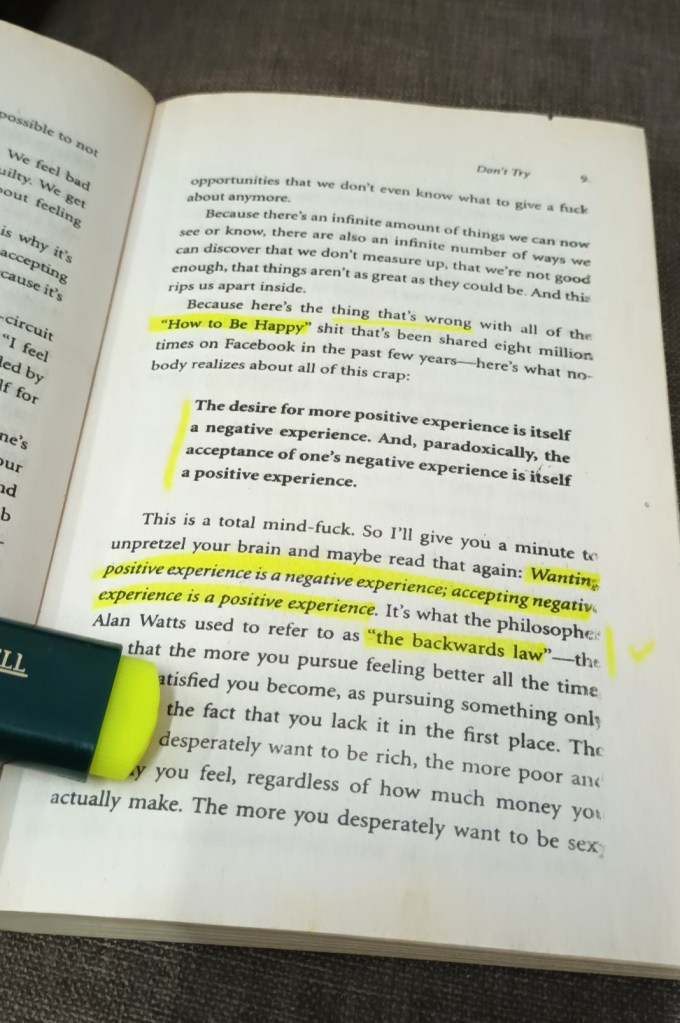
How to be happy? The desire for a more positive experience or itself a negative experience. And, paradoxically, the acceptance of one’s negative experience is itself a positive experience.
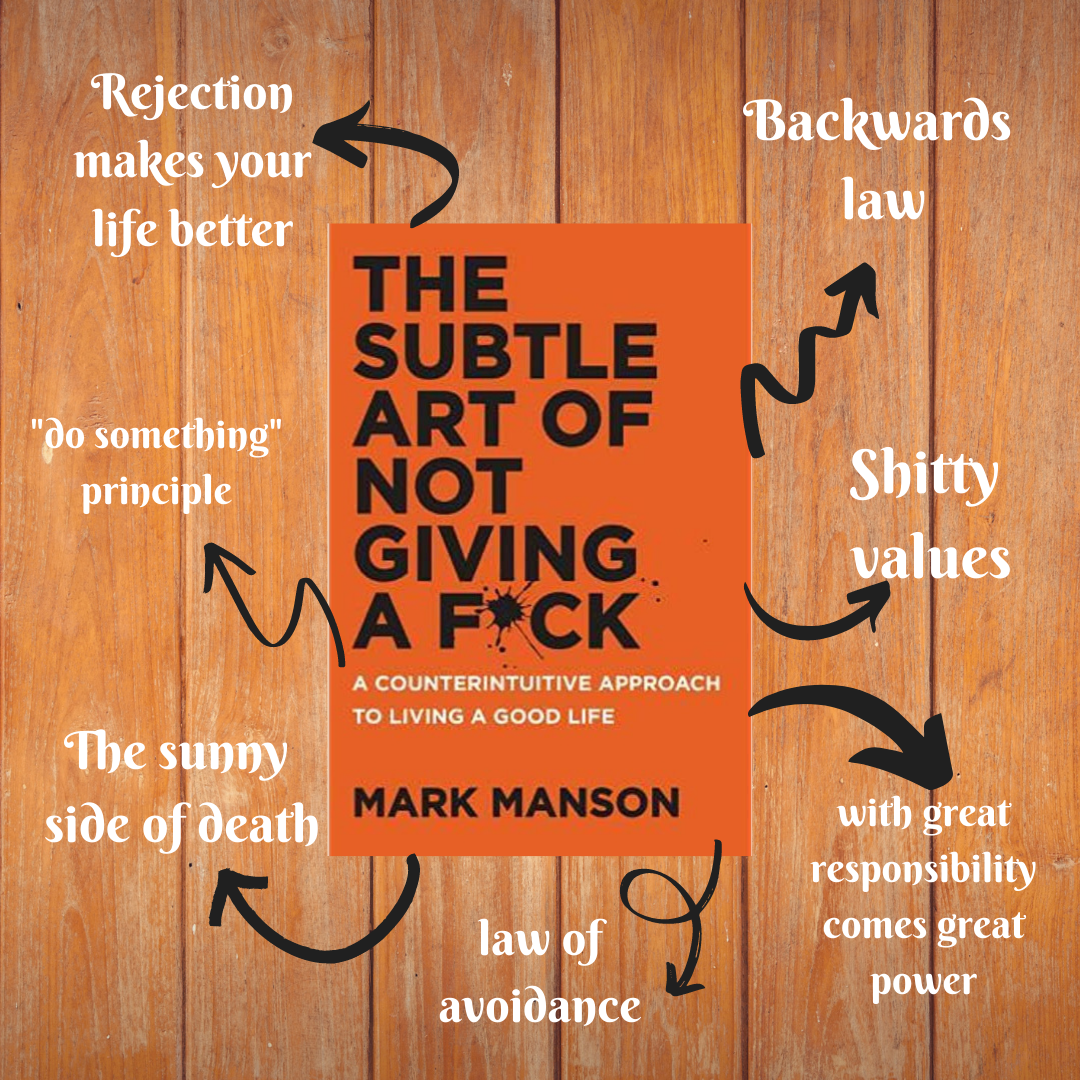
“The backwards law” by Alan Watts: ‘Wanting a positive experience is a negatives experience; accepting a negative experience is positive.’
What does not giving a fuck mean? #1: Not giving a fuck doesn’t mean being indifferent; it means being comfortable with being different.
#2: To not give a fuck about adversity, you must first give a fuck about something more important than adversity.
#3: Whether you realize it or not, you are always choosing what to give a fuck about.
Chapter 2: HAPPINESS IS A PROBLEM
Life itself is a form of suffering. – The rich suffer because of their riches. – The poor suffer because of their riches. – The poor suffer because of their poverty. – People without a family suffer because they have no family. – People with a family suffer because of their family. – People who pursue worldly pleasures suffer because of their worldly pleasures. – People who abstain from worldly pleasure suffer because of their abstention.
This isn’t to say that all suffering is equal. Some suffering is certainly more painful than others suffering. But we all must suffer nonetheless.
Pain and loss are inevitable and we should let go of trying to resist them.
There is a premise that underlies a lot of our assumptions and beliefs. The premise is that happiness is algorithmic. ( If I achieve X, then u can be happy. If I look like Y, then I can be happy. If I can be with a person like Z, then I can be happy.)
This premise, though, is the problem. Happiness is not a solvable equation. Dissatisfaction and unease are inherent parts of human nature, and, as we’ll see, necessary components to creating consistent happiness.
The problem never stops; they merely get exchanged and/or upgraded. Happiness comes from solving problems. The keyword here is “solving.” If you’re avoiding your problems or feel like you don’t have any problems, then you’re going to make yourself miserable. If you feel like you have problems that you can’t solve, you will likewise make yourself miserable. The secret sauce is in the solving of the problems, not in not having problems in the first place. To be happy we need something to solve.
Your problems are, the concept is the same: solve problems; be happy. Unfortunately, for many people, life doesn’t feel that simple. That’s because they fuck things up in at least one of two ways: 1. Denial. Some people deny that their problems exist in the first place. 2. Victim Mentality. Some choose to believe that there is nothing they can do to solve their problems, even when they in fact could.
“hedonic treadmill” Psychologists sometimes refer to a concept: the idea that we’re always working hard to change our life situation, but we actually never feel very different. This is why our problems are recursive and unavoidable. The person you marry is the person you fight with. The house you buy is the house you repair. The dream job you take is the job you dress over. Everything comes with an inherent sacrifice- whatever makes us feel good will also inevitable make us feel bad. What we gain is also what we lose. What creates our positive experiences will define our negative experiences.
Chapter 3: YOU ARE NOT SPECIAL
The problem with the self-esteem movement is that it measured self-esteem by how positively people felt about themselves. But a true and accurate measurement of one’s self-worth is how people feel about the negative aspects of themselves.
Entitlement is impervious. People who are entitled delude themselves into whatever feeds their sense of superiority. They keep their mental facade standing at all costs, even if it sometimes requires being physically or emotionally abusive to those around them. But entitlement is a failed strategy. It’s just another high. It’s not happiness.
If I’m not going to be extraordinary, what’s the point? The rare people who do become truly exceptional something do so not because they believe they’re exceptional. On the contrary, they become amazing because they’re obsessed with improvement. And that obsession with improvement stems from an unerring belief that they are in fact, not that great at all. It’s anti-entitlement. People who become great at something become grease because they understand that they are not already great they are mediocre, they are average – and that they could be so much better.
Chapter 4: THE VALUE OF SUFFERING
Self-awareness is like an onion. There are multiple layers to it, and the more you peel them back, the more likely you’re going to start crying at inappropriate times. – Let’s say the first layer of the self-awareness onion is a simple understanding of one’s emotions. – The second layer of the self-awareness onion is an ability to ask why we feel certain emotions. These why questions are difficult and often take months or even year’s to answer consistently and accurately. – The third level is our personal values: Why do I consider this to be success/failure? How am I choosing to measure myself? By what standard am I judging myself and everyone around me?
People’s perceptions and feelings may change, but the underlying values, and the metrics by which those values are assessed, stay the same. This is not real progress. This is just another way to achieve more highs.
Shitty values: There are a handful of common values that create really poor problems for people – problems that can hardly be solved.
1. Pleasure. Pleasure is great, but it’s a horrible value to prioritize your life around. Pleasure is a false god. Research shows that people who focus their energy on superficial pleasure end up more anxious, more emotionally unstable, and more depressed.
2. Material Success. The issue with overvaluing material success is the danger of prioritizing it over other values, such as honesty, nonviolence, and compassion. When people measure themselves not by their behaviour, but by the status symbols they’re able to collect, then not only are they shallow, but they’re probably assholes as well.
3. Always Being Right. The fact is people who base their self-worth on being right about everything prevent themselves from learning from their mistakes. They lack the ability to take on new perspectives and empathize with others. They close themselves off to new and important information.
4. Staying Positive. While there is something to be said for “staying on the sunny side of life,” the truth is, sometimes life sucks, and the healthiest thing you can do is admit it. Denying negative emotions leads to experiencing deeper and more prolonged negative emotions and to emotional dysfunction.
Good values: 1. Reality-based 2. Socially constructive, 3. Immediate or controllable
Bad values: 1. Superstitious 2. Socially destructive, 3. Not immediate or controllable.
Values are about prioritizing: The question is your priorities. What are the values that you prioritize above everything else, and that therefore influence your decision-making more than anything else?
Chapter 5: YOU ARE ALWAYS CHOOSING
If you are miserable in your current situation, chances are it’s because you feel like some part of it is outside your control- that there’s a problem you have no ability to solve, a problem that was somehow thrust upon you without your choosing.
“With great power comes great responsibility.” It is true. But there’s a better version of this quiet, version that actually is profound, and all you have to do is switch the nouns around: “with great responsibility comes great power.” The more we choose to accept responsibility in our lives, the more power we will exercise over our lives. Accepting responsibility for our problems is thus the first step to solving them.
The fault is past tense. Responsibility is present tense.
The biggest problem with victimhood chic is that it sucks attention away from actual victims.
There is no “How” “Do, or do not; there is no ‘how.'” You are already choosing, in every moment of every day, what to give a fuck about, so change is as simple as choosing to give a fuck about something else. It really is that simple. It’s just not easy. It’s simple but really, really hard.
Chapter 6: YOU’RE WRONG ABOUT EVERYTHING
Growth is an endlessly iterative process. When we learn something new, we don’t go from “wrong” to “right”. Rather, we go from wrong to slightly less wrong to slightly less wrong than that, then to even less wrong than that, and so on. We are always in the process of approaching truth and perfection without actually ever reaching truth or perfection.
We shouldn’t seek to find the ultimate ” right” answer for ourselves, but rather, we should seek to chip away at the ways that we’re wrong today so that we can be a little less wrong tomorrow.
Certainty is the enemy of growth. Nothing is for certain until it has already happened-and even then, it’s still debatable. That’s why accepting the inevitable imperfections of our values is necessary for any growth to take place.
Being wrong opens us up to the possibility of change. Being wrong brings the opportunity for growth. It means not cutting your arms open to cure a cold or splashing dog piss on your arms open to cure a cold or splashing dog piss on your face to look young again. It means not thinking “mediocre” is a vegetable, and not being afraid to care about things.
Evil people never believe that they are evil; rather they believe that everyone else is evil. In controversial experiments, now simply known as the Milgram Experiments, named for the psychologist Stanley Milgram, researchers told “normal” people that they were to punish other volunteers for breaking various rules.
The only way to solve our problems is to first admit that our actions and beliefs up to this point have been wrong and are not working. The openness to being wrong must exist for any real change or growth to take place.
Manson’s law of avoidance: – Work expands to fill up the time available for its completion. – Whatever can go wrong will go wrong. – The more something threatens your identity, the more you will avoid it.
How to be a little less certain of yourself? Questioning ourselves and doubting our own thoughts and beliefs is one of the hardest skills to develop. These questions will help you break a little more uncertainty in your life.
Question #1: What if I’m wrong? Question #2: What would it mean if I were wrong? Question #3: Would wrong create a better or the worst problem than my current problem, for both myself and others?
Simply reality: if it feels like it’s you versus the world, chances are it’s really just you versus yourself.
Chapter 7: FAILURE IS THE WAY FORWARD
Avoiding failure is something we learn at some later point in life. I’m sure a lot of it comes from our education system, which judges rigorously based on performance and punishes those who don’t do well. Another large share of its vines from overbearing or critical parents who don’t let their kids screw up on their own often enough, and instead punish them for trying anything new or not preordained.
Pain is part of the process To deny that pain is to deny our own potential. Just as one must suffer physical pain to build stronger bones and muscles, one must suffer emotional pain to develop greater emotional resilience, a stronger sense of self, increased compassion, and generally happier life.
But we’ve discussed this: you don’t know anything. Even when you think you do, you really don’t know what the fuck you’re doing. So really, what is there to lose?
The “do something” principle
Don’t just sit there. Do something. The answer will follow. Action isn’t just the effect of motivation, it’s also the cause of it.
1. We assume that these steps occur in a sort of chain reaction, like this: Emotional inspiration ➡ Motivation ➡ Desirable action.
2. The thing about motivation is that it’s not only a three-part chain but an endless loop: Inspiration➡ Motivation ➡ Action ➡ Inspiration ➡ Motivation ➡ Action ➡ etc.
3. Taking advantage of this knowledge, we can actually reorient our mindset as: Action ➡ Inspiration ➡ Motivation
Do something: That “something” can be the smallest via online action toward something else. It can be anything. You can become your own source of inspiration. You can become your own source of motivation. Action is always within reach.
Chapter 8: IMPORTANCE OF SAYING NO
Freedom grants the opportunity for greater meaning, but by itself, there is nothing necessarily meaning and a sense of importance in one’s life is through a rejection of alternatives, a narrowing of freedom, a choice of commitment to on w place, one brief, or (gulp) one of person.
Rejection makes your life better We need to reject something. Otherwise, we stand for nothing. is better or more desirable than anything else, then we are not and our life is meaningless. We are without values therefore live our life without any purpose. Rejection is an inherent and necessary part of maintaining our values, and therefore our identity. We are defined by what we chose to reject. And if we reject nothing (perhaps in fear of being rejected by something ourselves), we essentially have no identity at all.
The difference between a healthy and an unhealthy relationship comes down to two things: 1. How well each person in the relationship accepts responsibility, and 2. The willingness of each person to both reject and be rejected by their partner.
Entitled people fall into two traps in their relationships: 1. Either they expect other people to take responsibility for their problems, 2. Or, they take on too much responsibility for other people’s problems.:
There are yin and yang of a toxic relationship: 1. The Victim. The person who starts fires because it makes her feel important. 2. The Saver. The person who puts out fires because it makes him feel important.
If people cheat, it’s because something other than the relationship is more important to them. It may be power over others. It may be giving in to their impulses.
When trust is destroyed, it can be rebuilt only by the following steps: 1. The trust-breaker admits the true “values that caused the breach and break up:to them, and 2. The trust-breaker builds a solid track record of improved behaviour over time. (Without the first step there should be no attempt at reconciliation in the first place.)
Chapter 9. AND THEN YOU DIE
The Denial of Death, book in 1974 becomes one of the most influential works; essentially names two points:
1. As, humans were blessed with the ability to imagine ourselves in hypothetical situations, to contemplate both the past and the future, and imagine other realities or situations where things might be different. 2. We essentially gave two “selves”, the first self is the physical self-the one that eats, sleep, snores, and poops. The second self is our Identity, how we seek ourselves.
The sunny side of death. Nothing makes you present and mindful like being mere inches away from your death.
Confronting the reality of our mortality is important because it obliterates all the crappy, fragile, superficial values in life. While most people whittle their days chasing another buck, or a little bit more can’t and attention, or a little bit more assurance that they’re right or loved, death confronts all of us with a far more painful and important question What is your legacy?
Yes! A week is comparatively a small span of time to upgrade our insight. However, insight comes with age, experience, and maturity.
Basically, being insightful is a lifelong process. And, it is always better, to begin with, it as soon as possible. So, why not in the coming week?
I thoroughly believe that the week begins from the weekend before the week when you get ample time to think, plan and strategize your week ahead. Because, on the weekend you get an opportunity to slow down, to be sure to take for your personal growth by preparing yourself for what the week may bring ahead.
Here are 3 tips to upgrade your insight.
# 1 Respond rather than react
We all know that feeling when anger pops up. Someone says something that hurts you or a tough piece of feedback comes your way. Or someone isn’t listening closely as you like them to. And, at those moments we snap at someone we live with or say something hurtful ourselves emotionally.
Anger is a human emotion and we don’t need to avoid or repress it. Those reactions are instincts out of protection or defence of ourselves.
But there is a better way to navigate our emotional reactions. It’s the power of waiting when you have something that you don’t like. And, decide how you want to respond? What do you need?
You can open up your perspective on the shared values you might have with the person who acted in an appreciative manner with all of this you can think through a response with compassion.
#2 Think of the mistakes as learning lessons
It’s been said that ‘if you survive your first heart attack then you could actually have a better chance of living up to 90 to 100 years than someone who didn’t have a heart attack.
And, the reason why?As doctors say ‘if you don’t change the way your life is, if you don’t change the way you are, if you don’t change whatever you consume, if you don’t change what you get affected of, you could actually die.
This is a way you require downfall in your life. Everything what happens in your life whether it is positive or negative is learning experience. Learning requires failure in life.
You have to fail. And, when you fail you have to look at the experience and find it out what you can get out of everytime when you fail.
There is one secret! This is what most people do. Most people fail and they get into the mindset of, ‘oh man, this was not for me, I must have picked the wrong thing that successful person would have chosen something else.’
But in reality: All the successful people that they are looking at are just the proper, ones who happen to get it right once. They say that the great thing about success is that you only have to be right once. But, to be right once you have to be wrong a lot more times than you are right.
#3 Turn pain into power
Anger causes the maximum pain to you. Fortunately, you do possess power to transform it into power.
“Anger is just an energy and all energy can be transformed.” -Marie Forteo
I believe that the emotion of anger is present even to make us transform it into the most powerful transformation of energies that any other emotion can serve us with.
Haven’t you experienced this ever? You must have.
3 Steps to channel ANGER into a FORCE for GOOD:
1. FEEL IT
– Take a really deep breath and see if you can feel that energy somewhere in your body. – Just like you know how excitement can sometimes feel like butterflies in your belly. – Typically it only lasts just a few seconds, from where you would learn that pain is short-lived, and so could deal with it better.
1. QUESTION IT
Get curious and ask yourself, – what exactly do you feel angry about? – what do you feel is wrong right now? – and, more importantly, why?
3. TRANSFORM IT
It’s about answering: – What do you think should happen instead? – What is a positive action that you might want to take to help yourself? – Is there something that you might want to share with others?
“Use that anger. You write it. You paint it. You dance it. You march it. You vote for it. You do everything about it.”










 Literally You